District Spotlight
Providence Enrollment Fell 4,012 During State Intervention
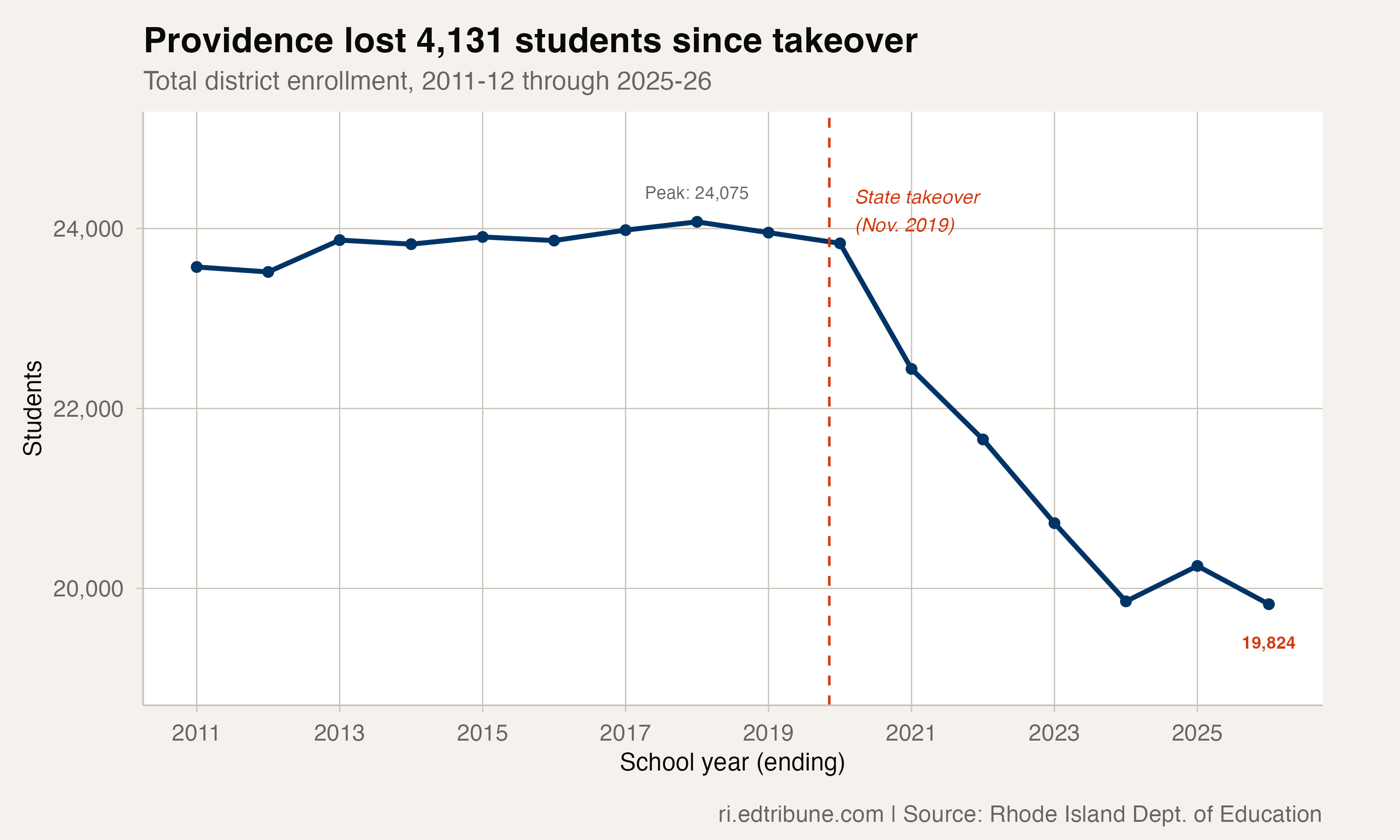
Providence enrollment fell from 23,836 in 2019-20 to 19,824 in 2025-26, a loss of 4,012 students or 16.8% during the state-intervention period.
Data-Driven Education Journalism for the Ocean State
Education News & Data
Local education reporting from every corner of Rhode Island, grounded in Rhode Island Department of Education data.
Rhode Island's four-year dropout rate fell from 14.12% to 7.65% between the 2010 and 2024 reporting years, though service-group gaps remain.
Rhode Island's five-year graduation measure is 6.0 points higher for students receiving special education services, though a gap remains.
Rhode Island's published four-year graduation rate was 93.8% for the CTE subgroup and 84.1% for all students in 2024, a 9.7-point difference.
Rhode Island's 5-year graduation rate rescues foster care (+8.6pp), homeless (+7.6pp), and special education (+6.0pp) students, but not LEP students, who actually do worse.
Providence enrollment fell from 23,836 in 2019-20 to 19,824 in 2025-26, a loss of 4,012 students or 16.8% during the state-intervention period.
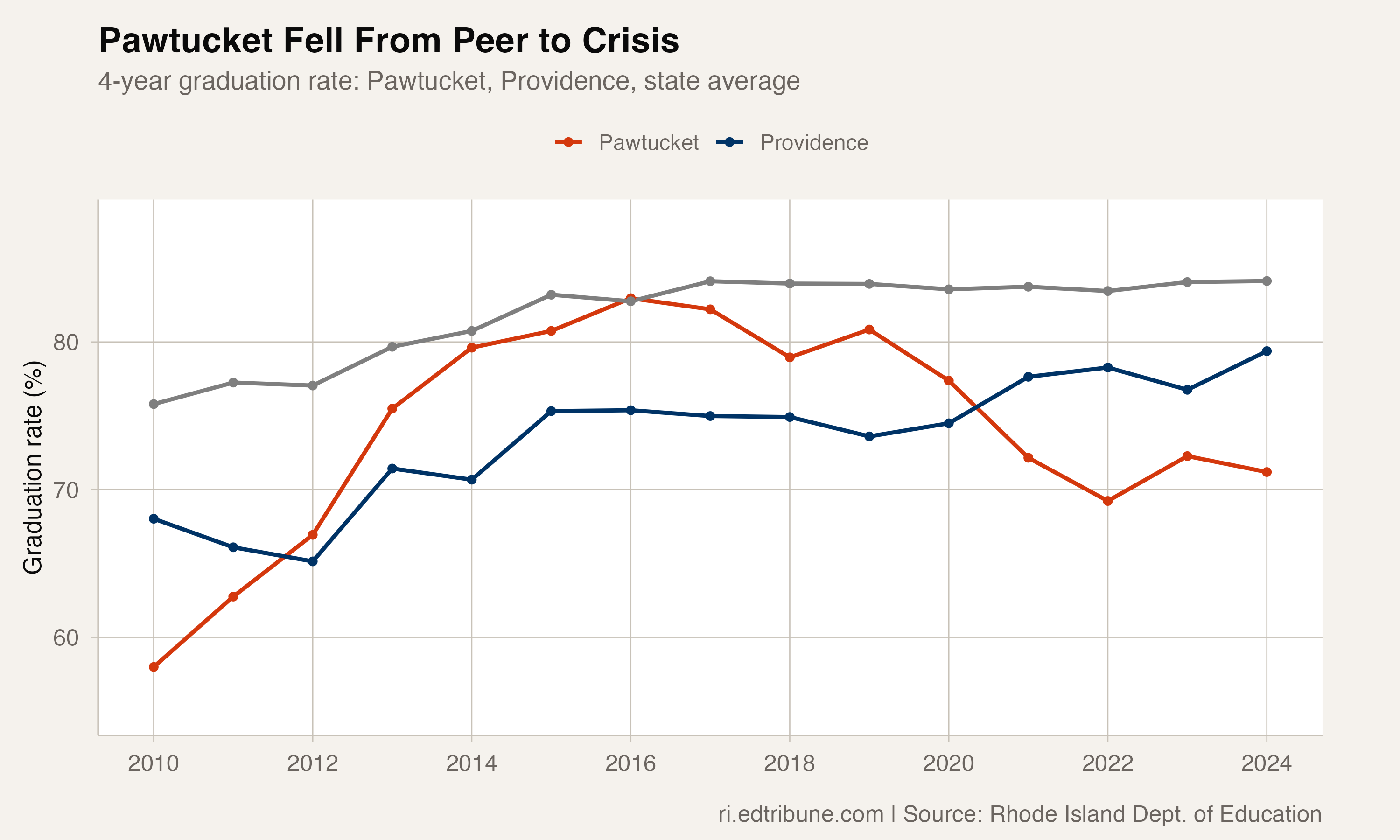
Pawtucket climbed from 58% to 83% in six years, making it a turnaround success story. Then the rate fell back to 71%, with a 19% dropout rate.
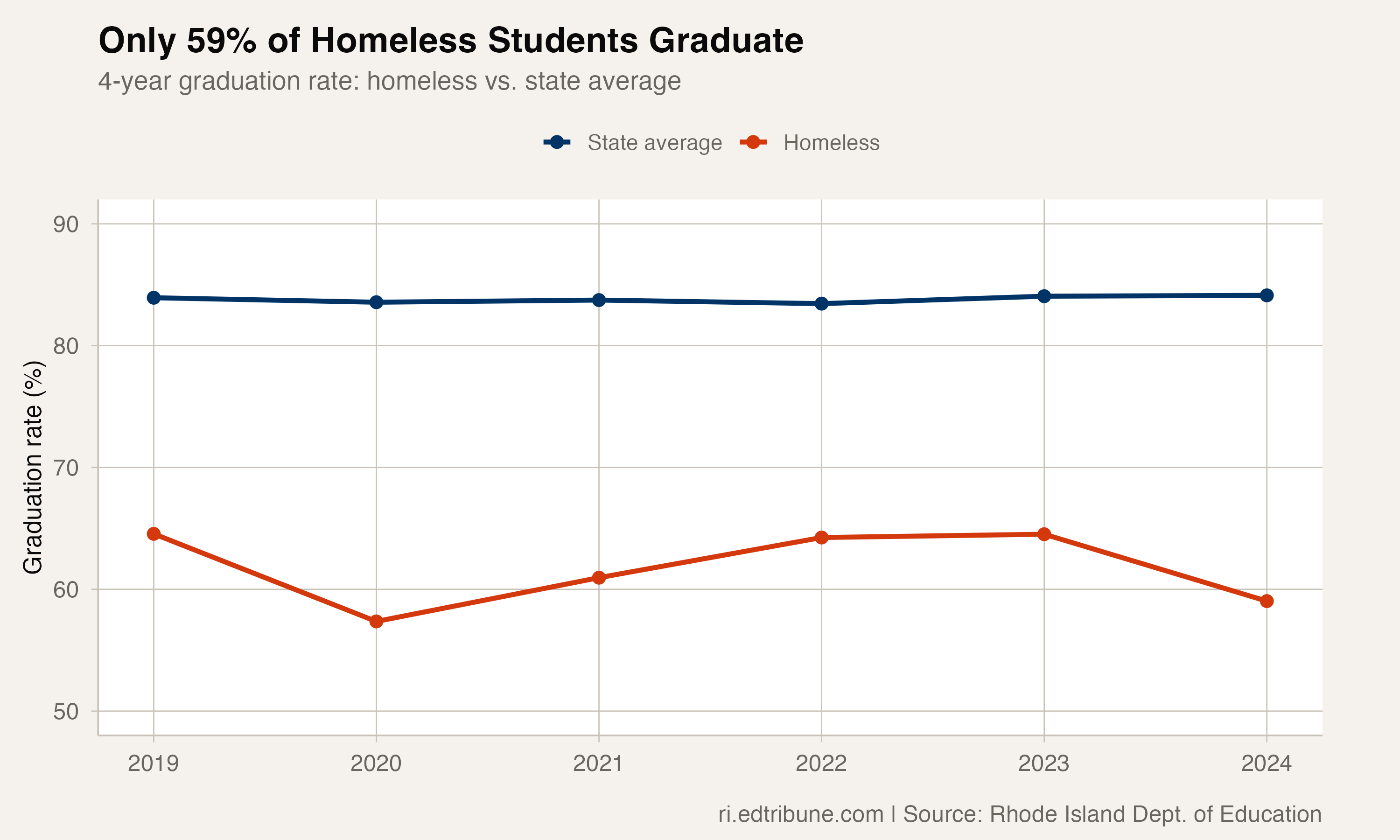
Students who are currently homeless in Rhode Island graduated at just 59.0% in 2024, a 25-point gap from the state average and no improvement since reporting began in 2019.
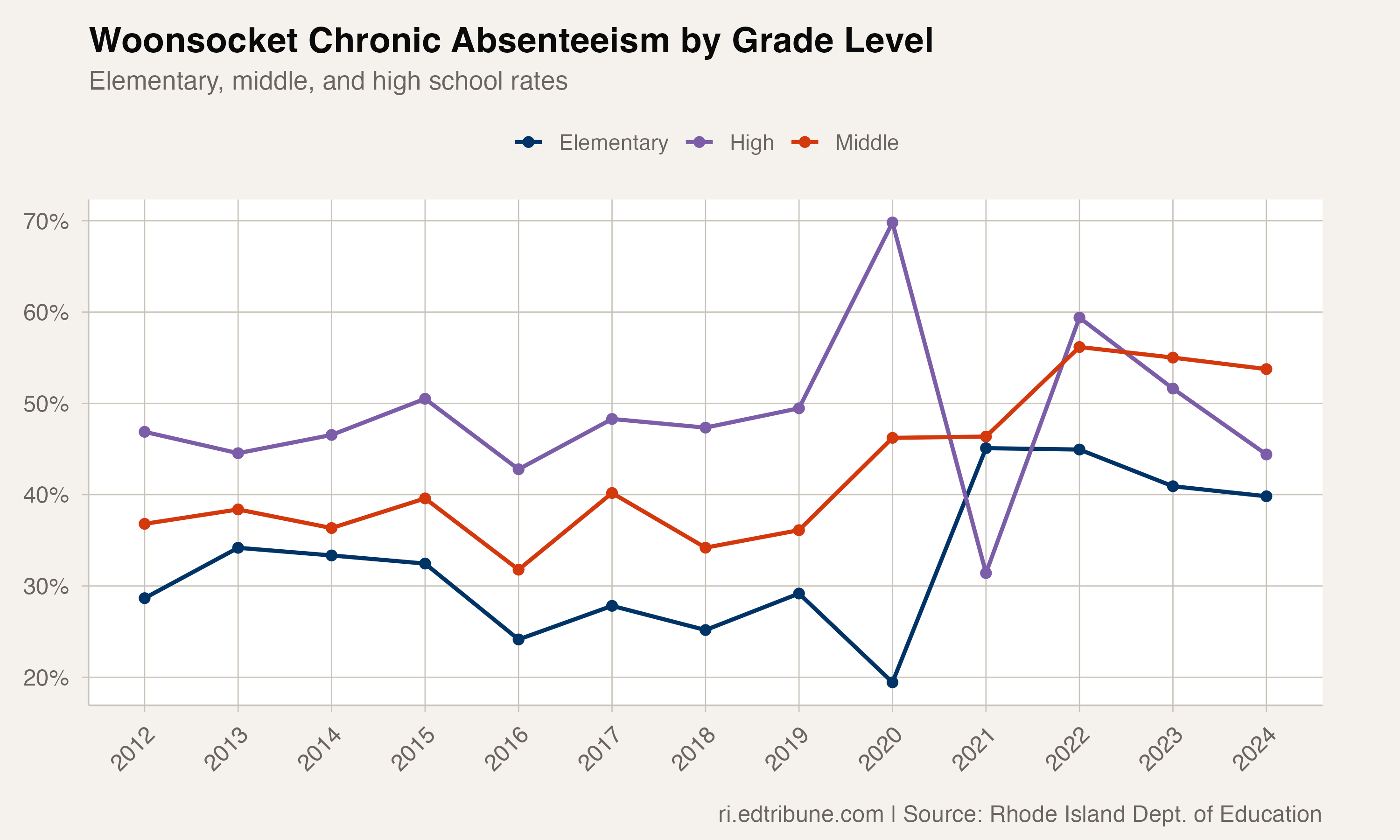
Woonsocket's 44% chronic absenteeism rate is the highest among Rhode Island's large districts, with more than half of middle schoolers chronically absent.
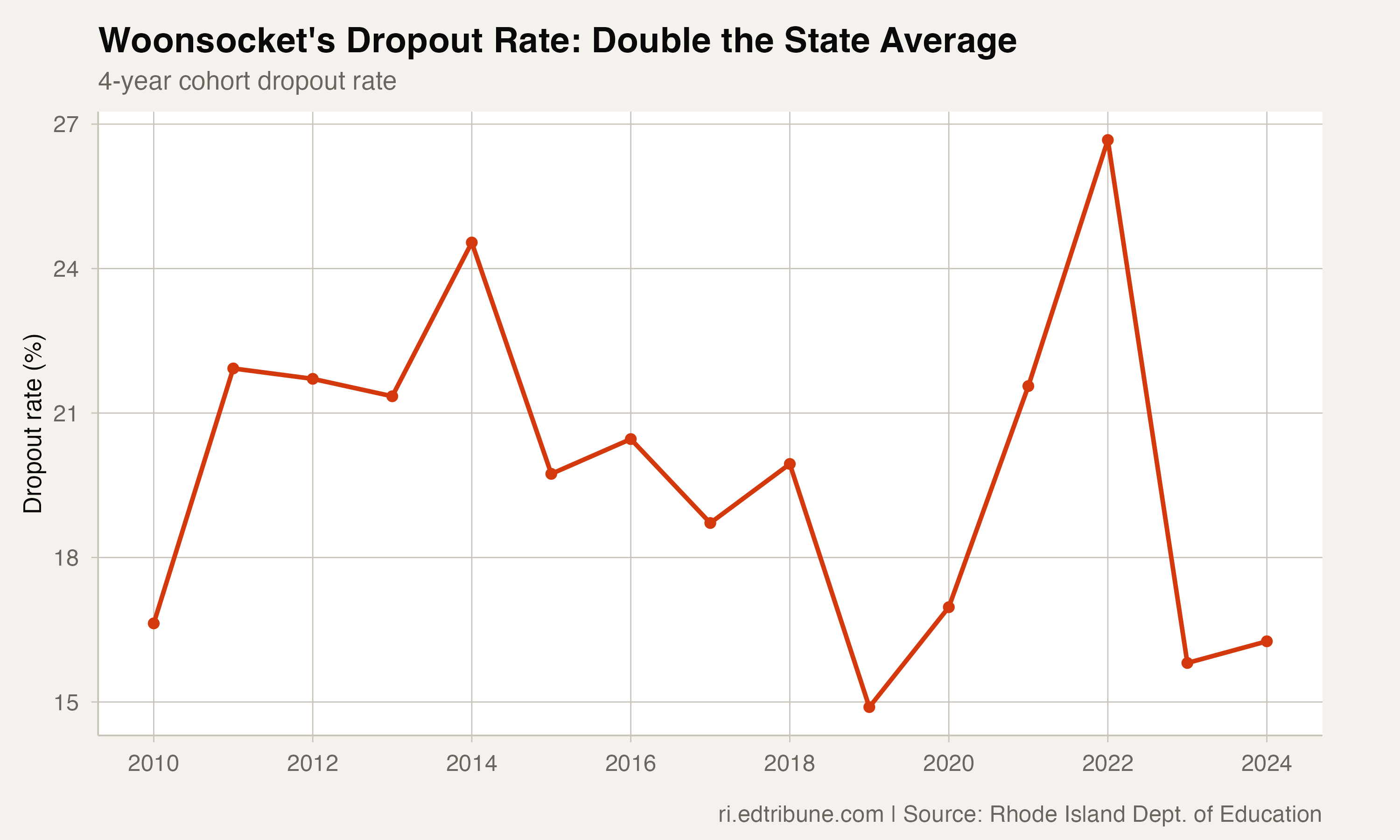
Woonsocket climbed from 63% to 74% over a decade, then collapsed back to 62% in three years. The dropout rate is double the state average.
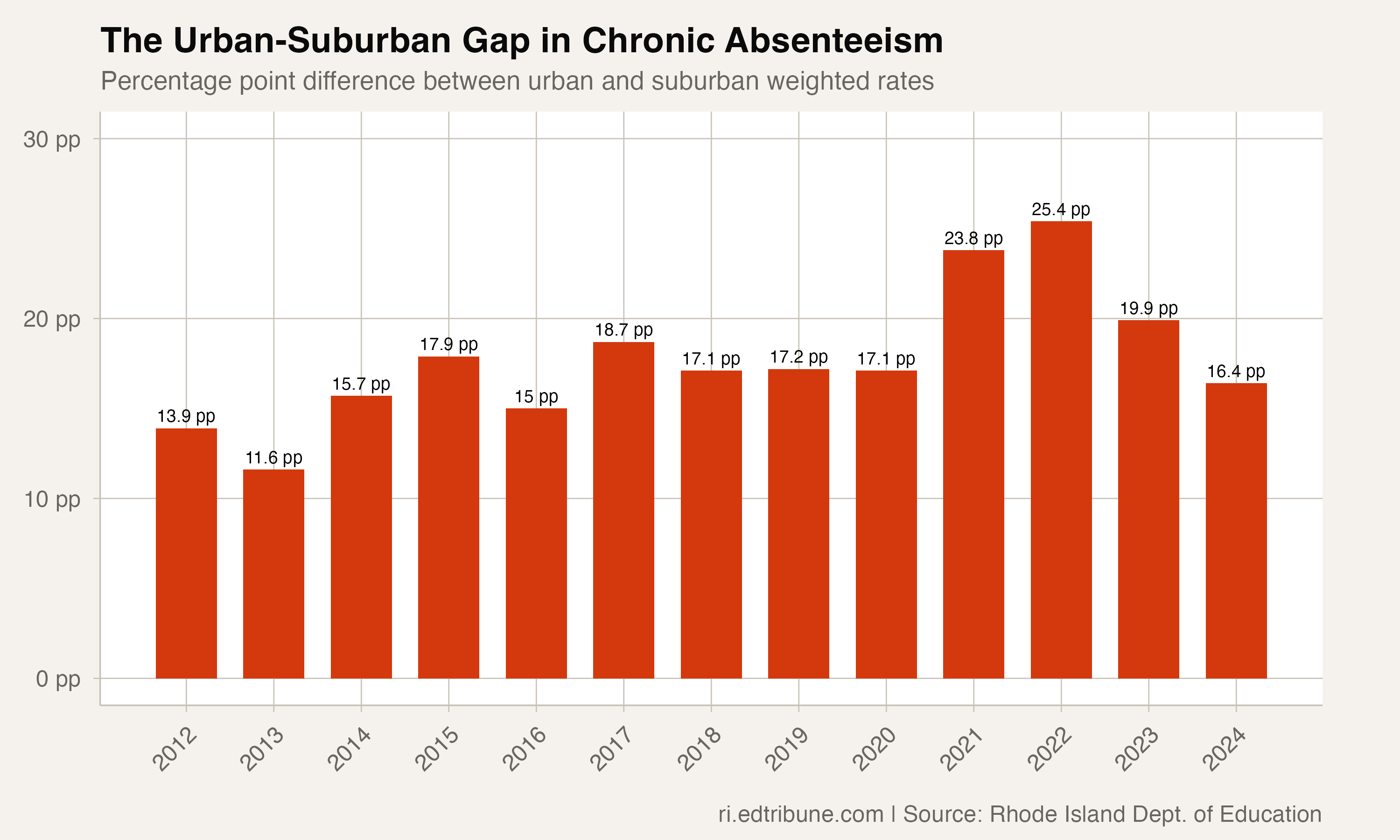
Rhode Island's urban districts have a 32% chronic absenteeism rate, double the 15.6% suburban rate. COVID widened the gap to 25 points before it narrowed.
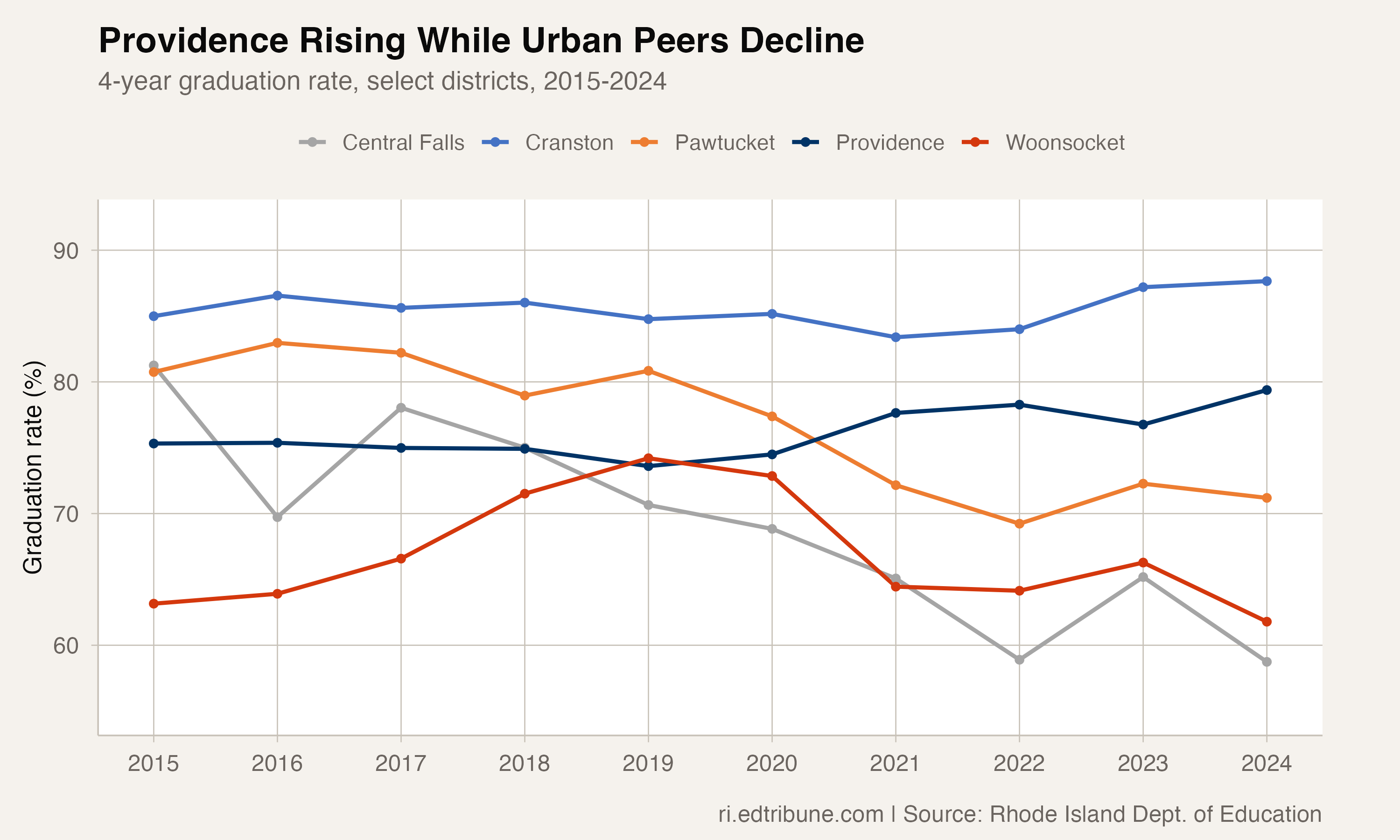
Providence posted a 79.4% graduation rate in 2024, its highest on record and a 5.8-point improvement since the state took over the district in 2019.
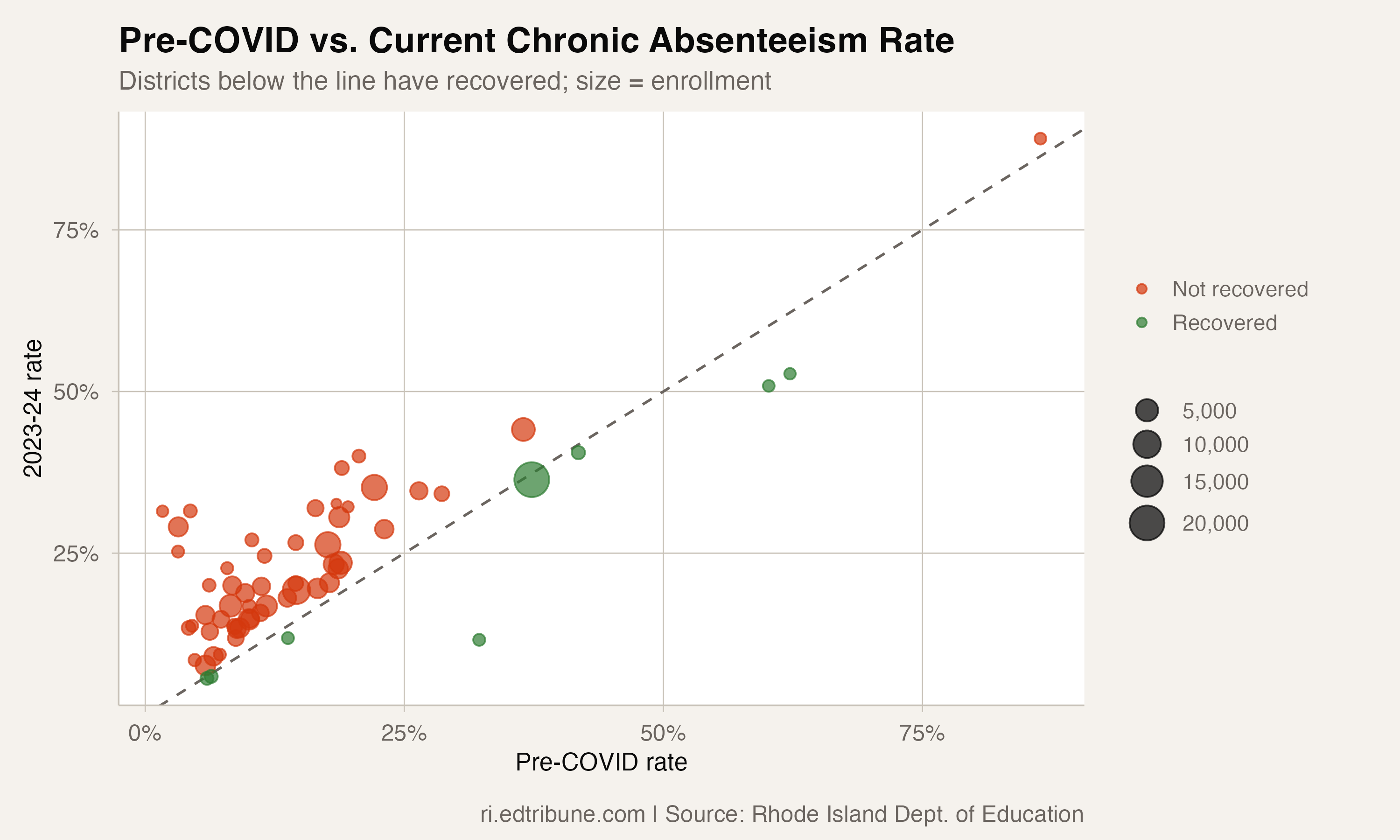
Despite nationally recognized attendance campaigns, only 13.3% of Rhode Island districts have recovered to pre-COVID chronic absenteeism levels.
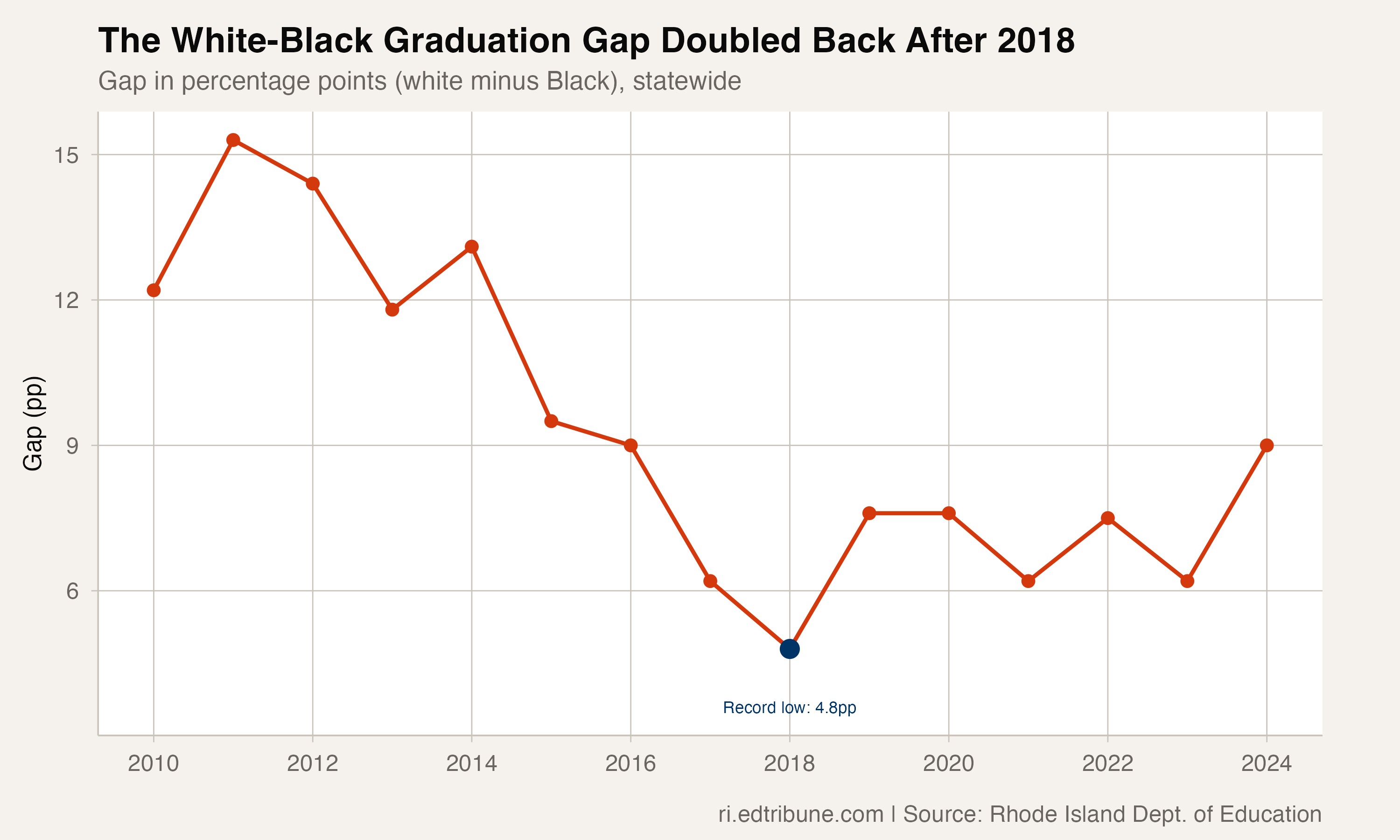
Rhode Island's white-Black graduation gap was closing steadily until 2018, reaching a record-low 4.8 points. Six years later, it's back to 9 points.
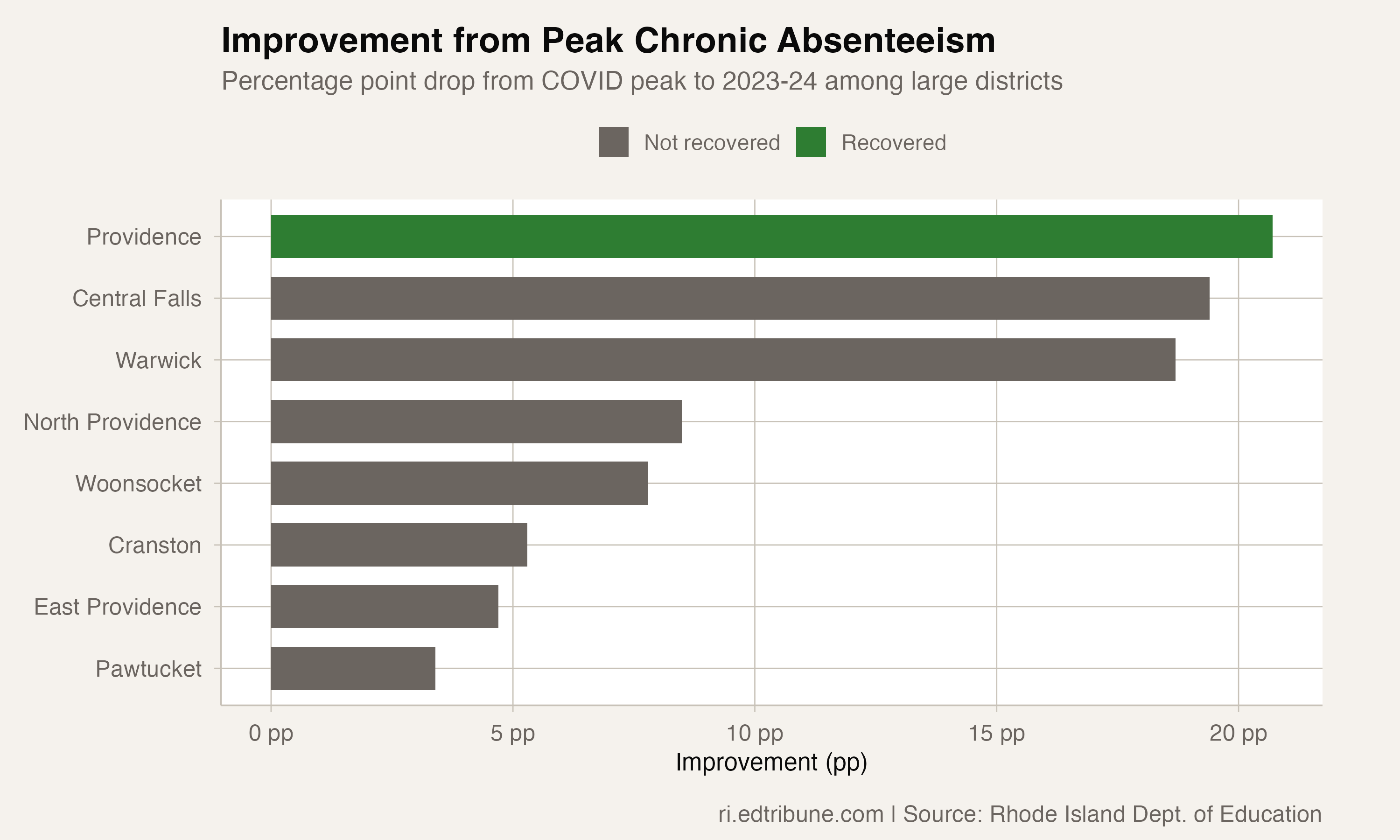
Providence Public Schools cut chronic absenteeism from 57% to 36% in two years under state control — the only large RI district to recover to pre-COVID levels.
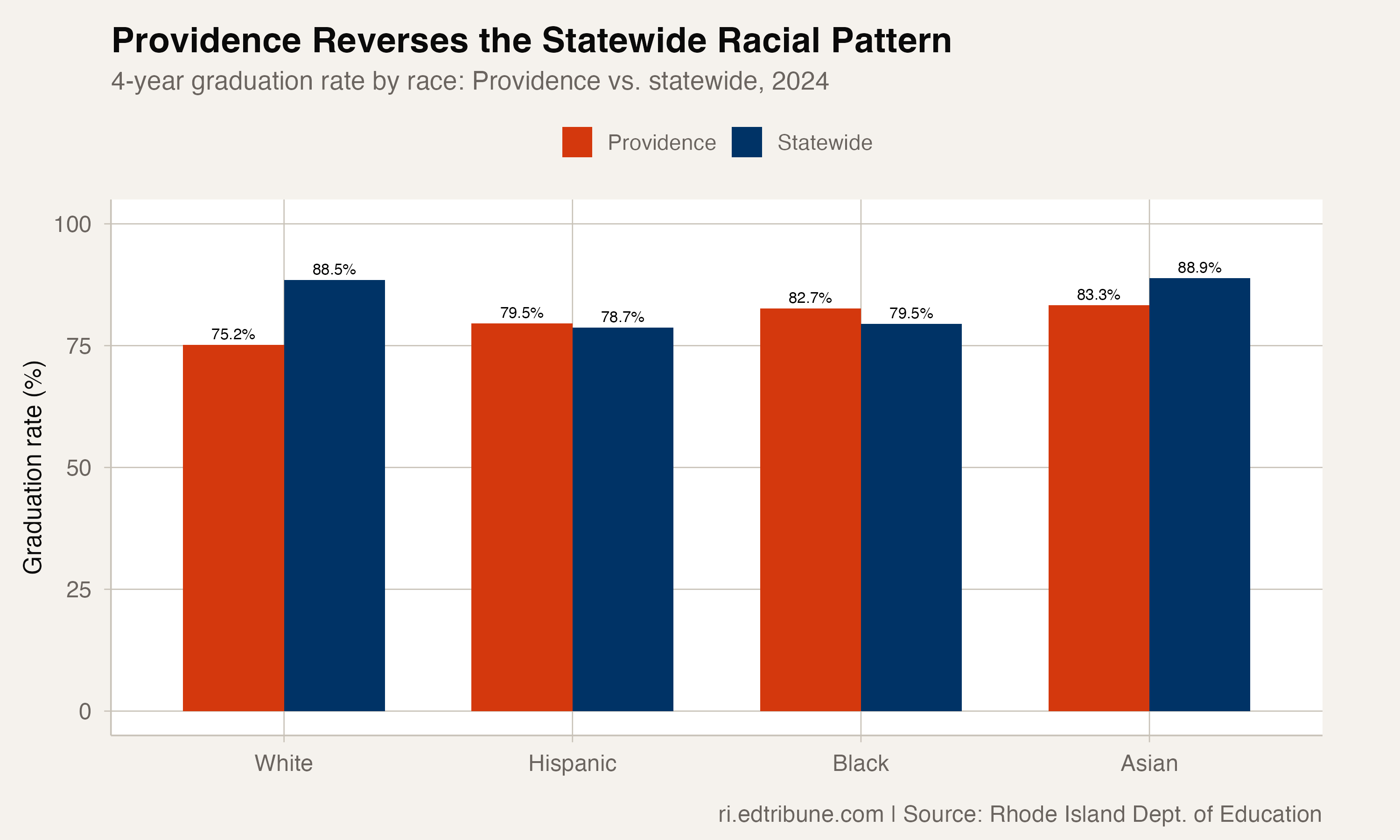
Providence's white students graduate at 75.2%, the lowest among the district's four largest racial groups, reversing the statewide pattern where white students lead at 88.5%.