District Spotlight
Pawtucket's High Schools: 1 in 2 Students Chronically Absent
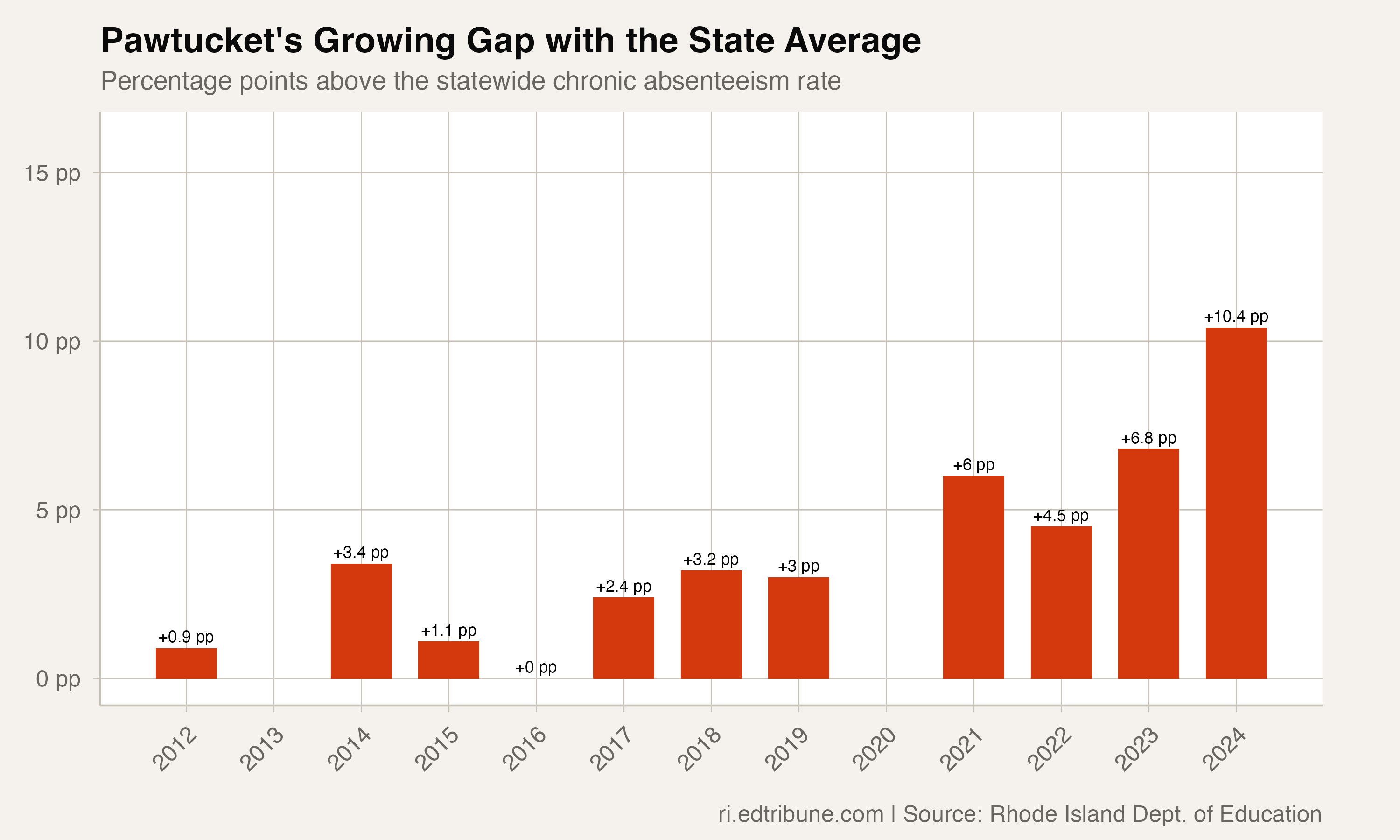
Half of Pawtucket's high schoolers are chronically absent — the rate is still rising while the rest of Rhode Island improves. Tolman High hit 59%.
Data-Driven Education Journalism for the Ocean State
Page 2 of 3
Half of Pawtucket's high schoolers are chronically absent — the rate is still rising while the rest of Rhode Island improves. Tolman High hit 59%.
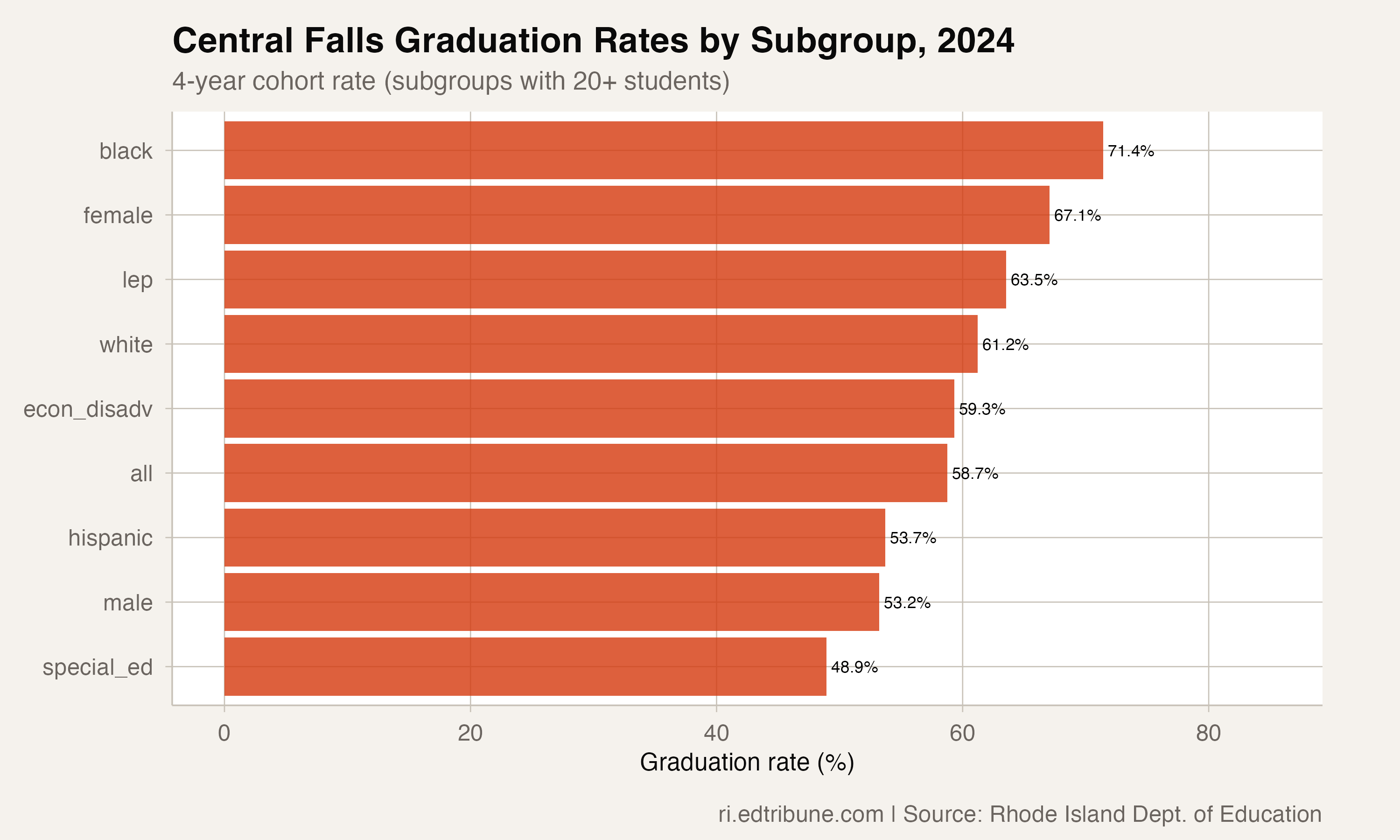
After 33 years of state control, Central Falls' graduation rate peaked at 81.2% in 2015 and has fallen to 58.7% — with a dropout rate of 25.2%.
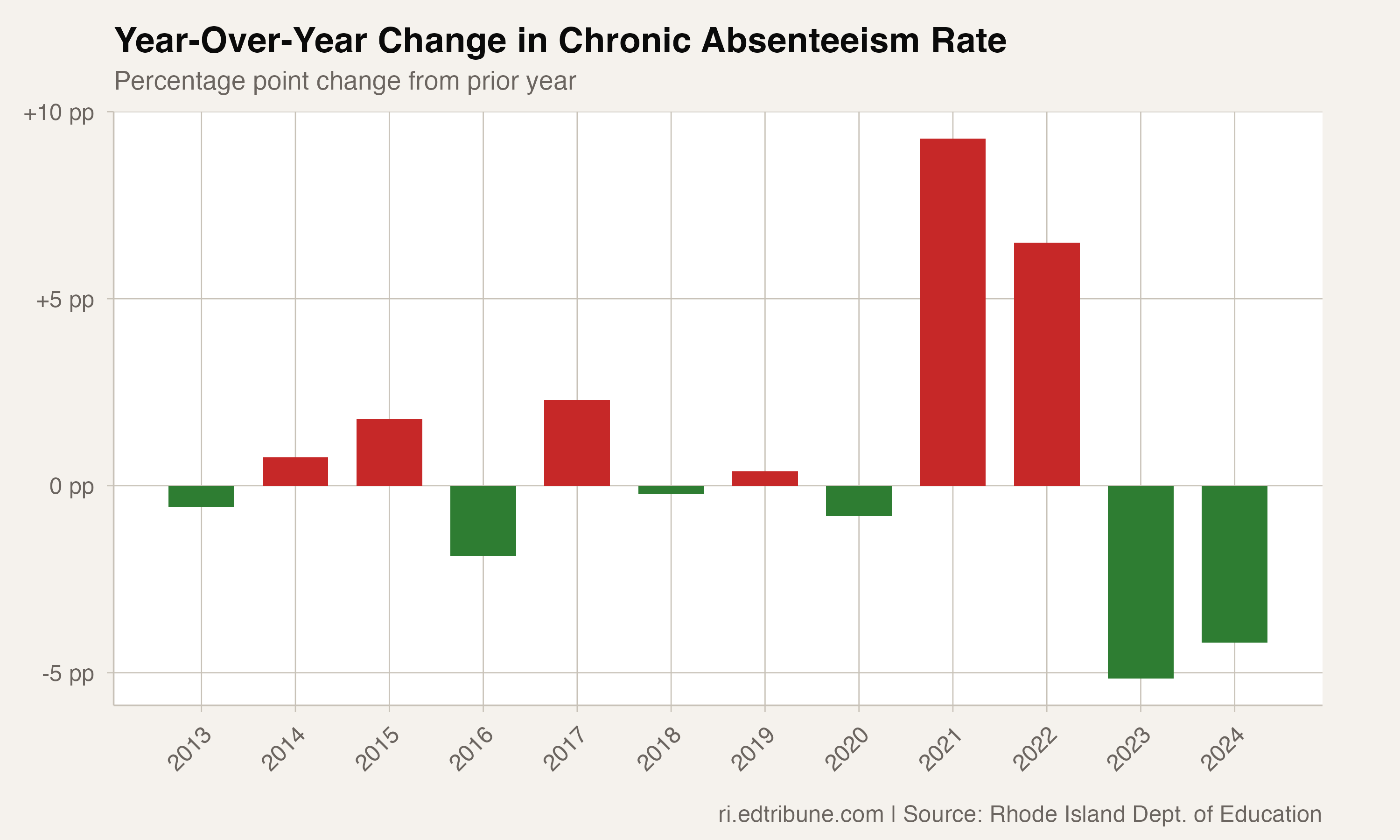
Rhode Island's chronic absenteeism fell from 34.1% to 24.8%, but 33,061 students still miss 10%+ of school. Middle schools are recovering slowest.
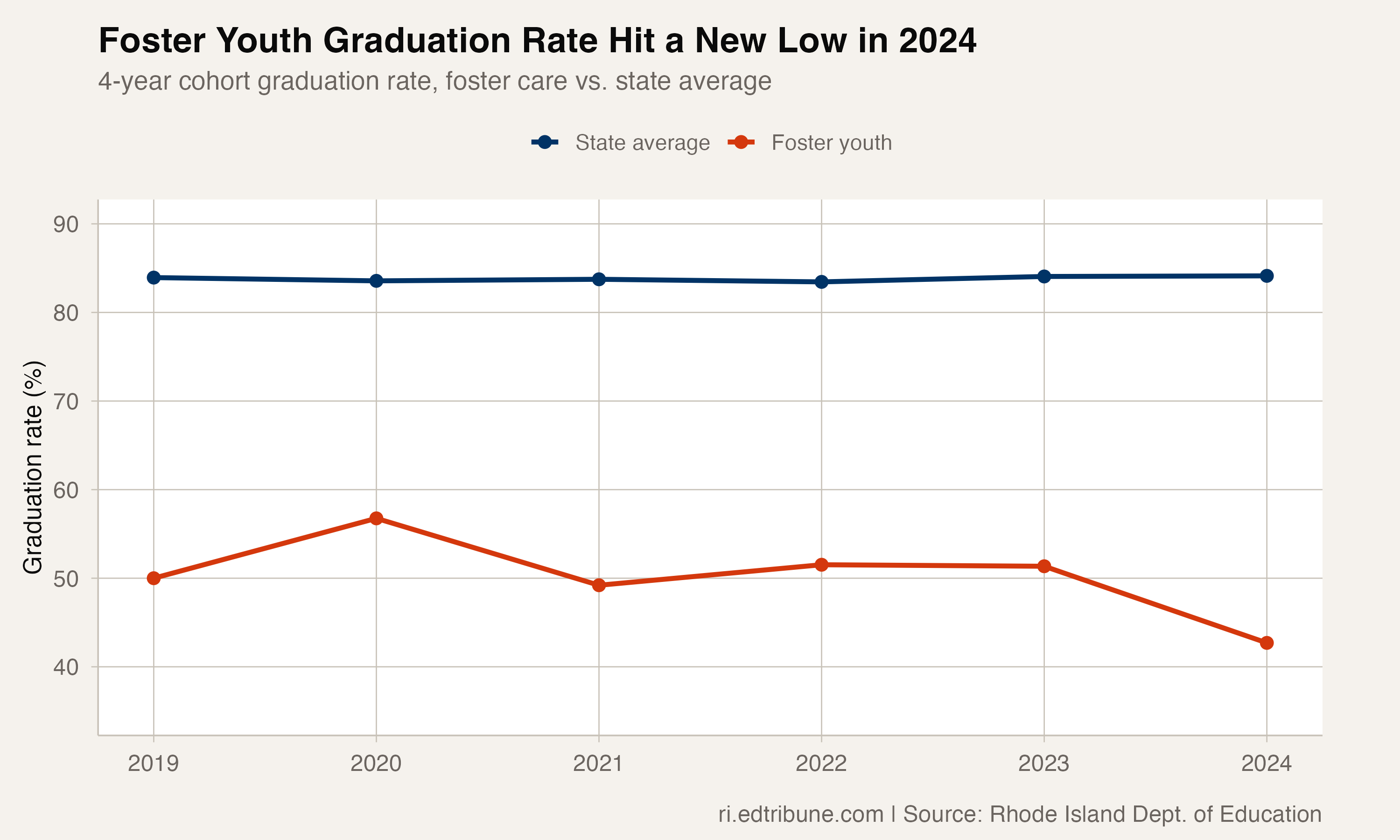
Rhode Island's foster youth graduated at just 42.7% in 2024, a new low and an 8.7-point drop from the prior year. A 17-member legislative commission is studying the problem.
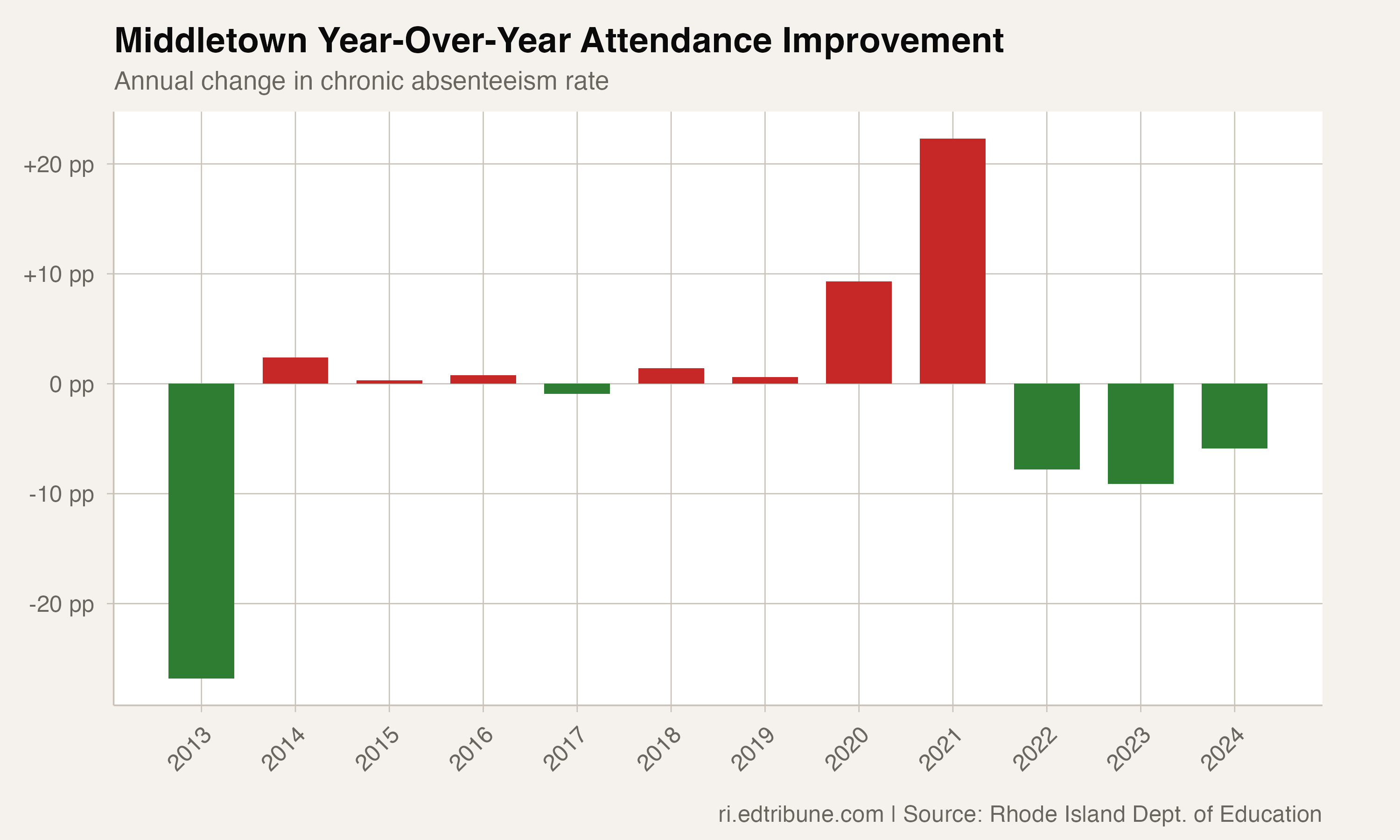
Middletown cut chronic absenteeism from 42.7% to 19.9% in three years — the largest improvement among mid-size RI districts, without state intervention.
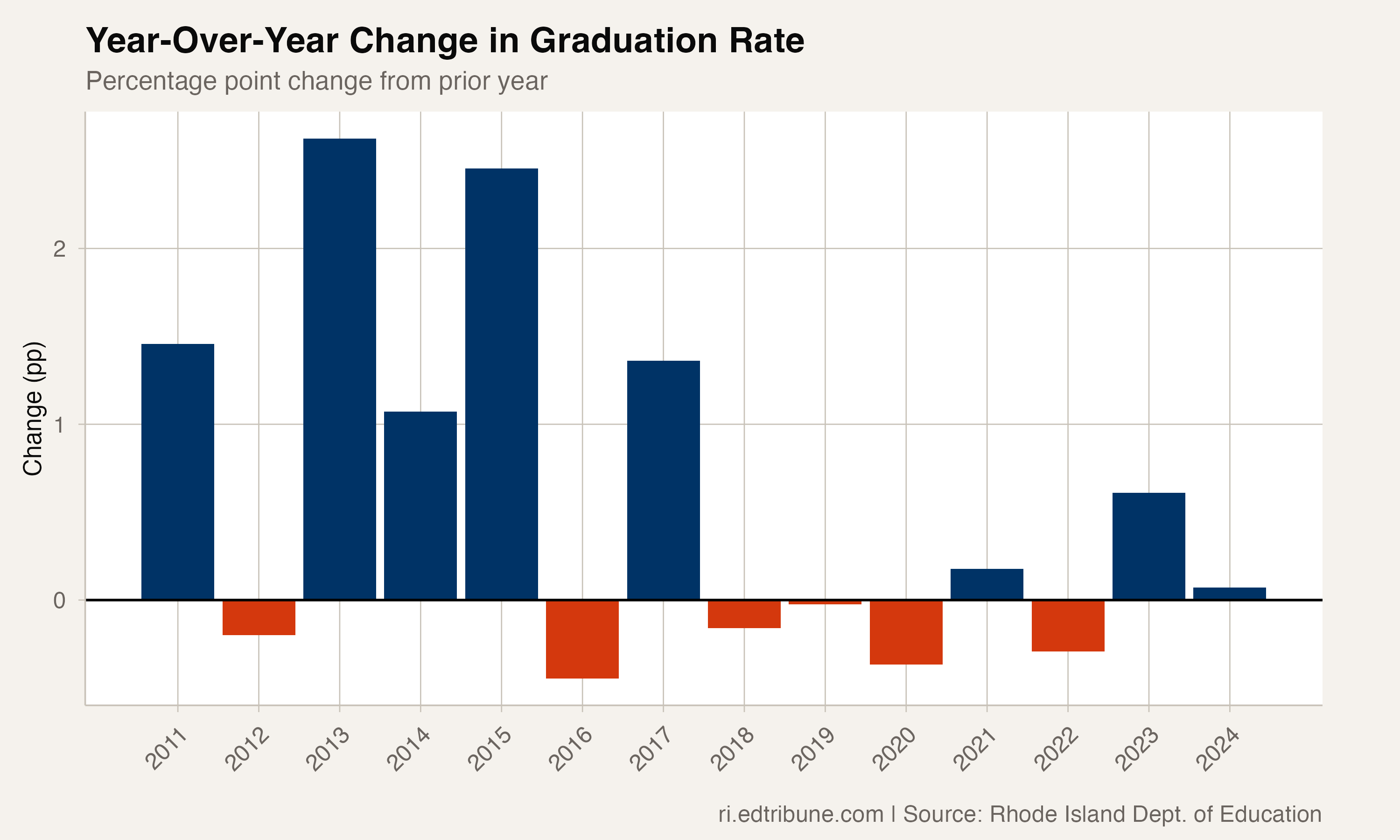
After climbing 8 points from 2010 to 2017, Rhode Island's 4-year graduation rate has flatlined between 83.4% and 84.1% — unable to crack 85% while the national average sits at 87%.
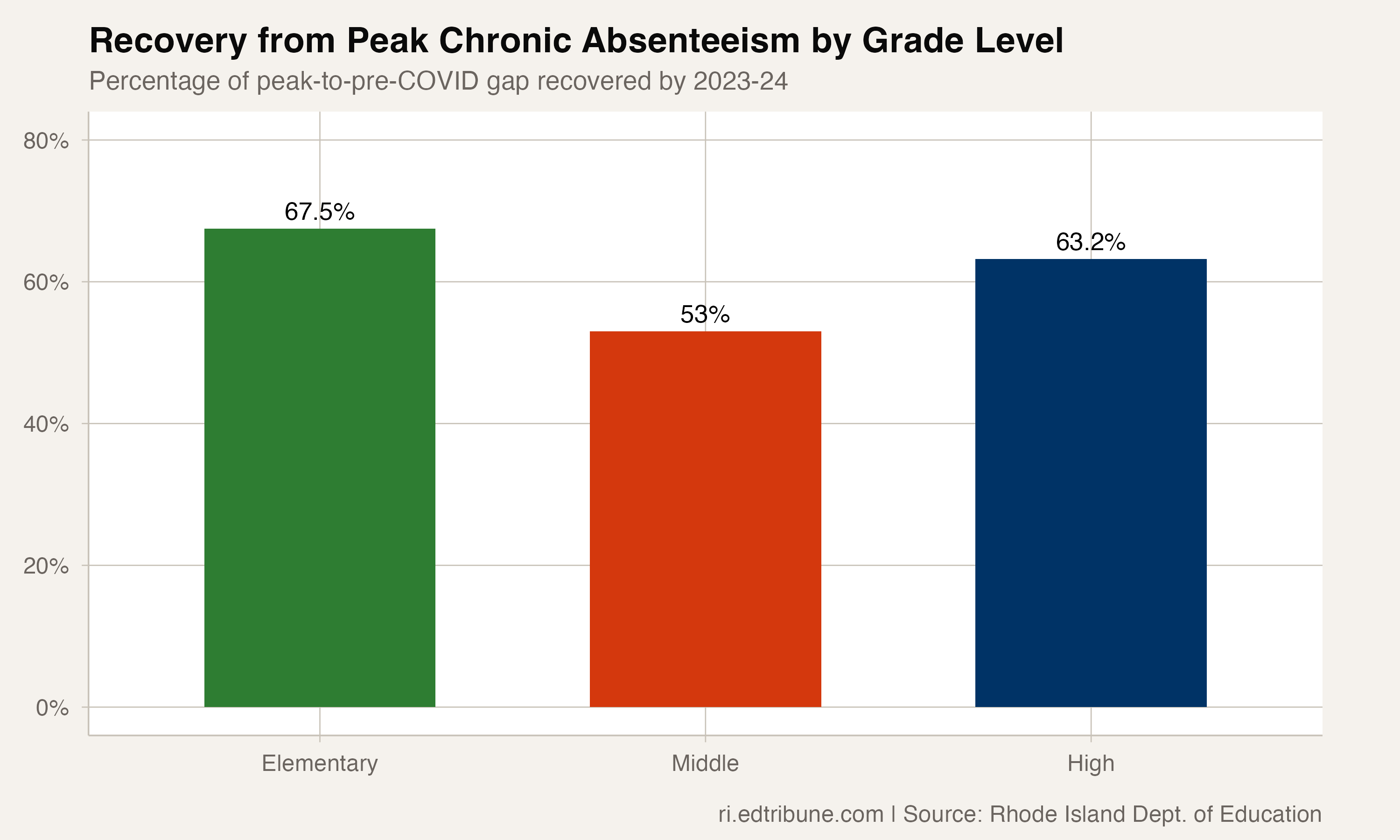
Rhode Island's middle school chronic absenteeism has recovered only 53% from peak — the slowest of any grade level, with 1 in 4 students chronically absent.
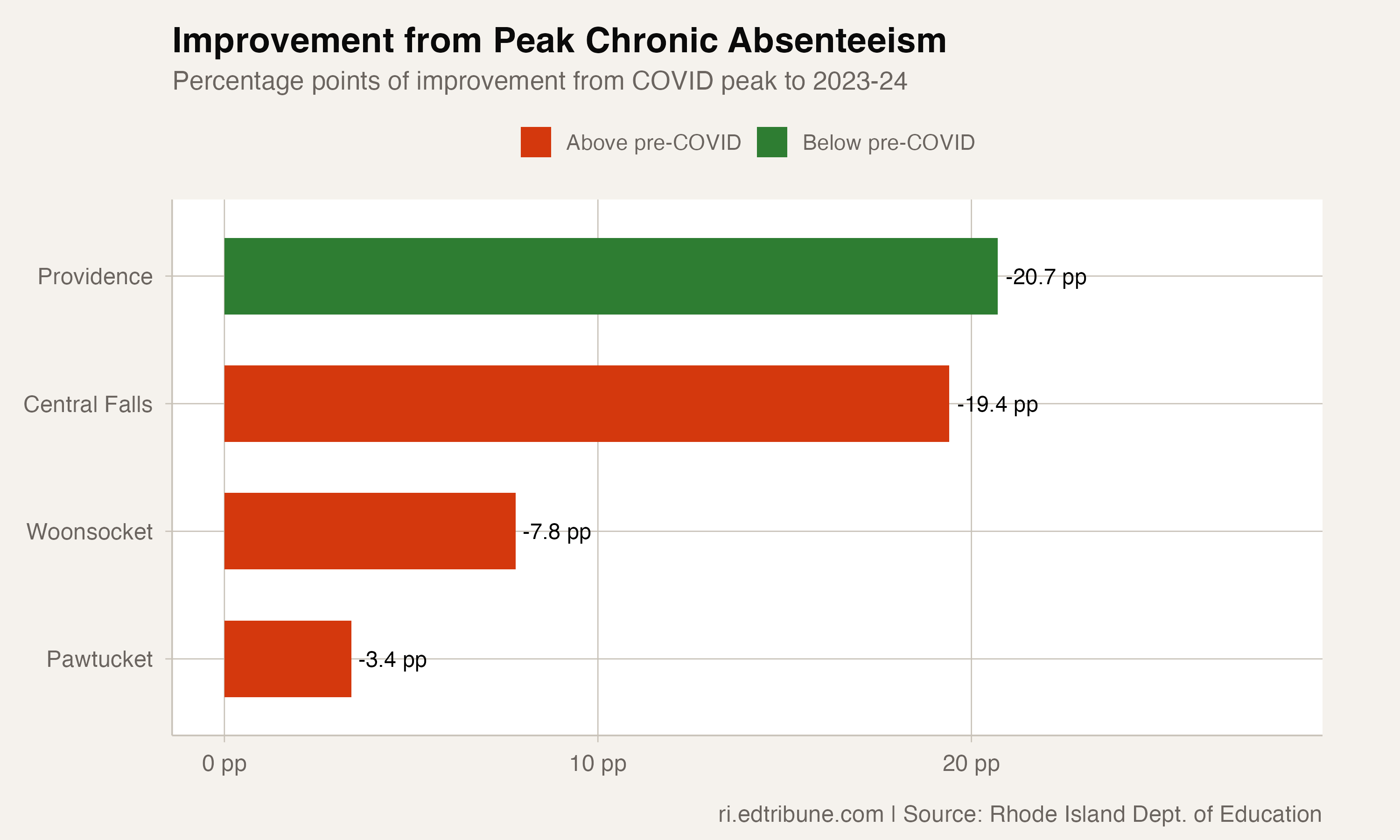
RI's four gateway cities all exceeded 33% chronic absenteeism in 2022. Providence and Central Falls recovered dramatically; Pawtucket and Woonsocket barely moved.
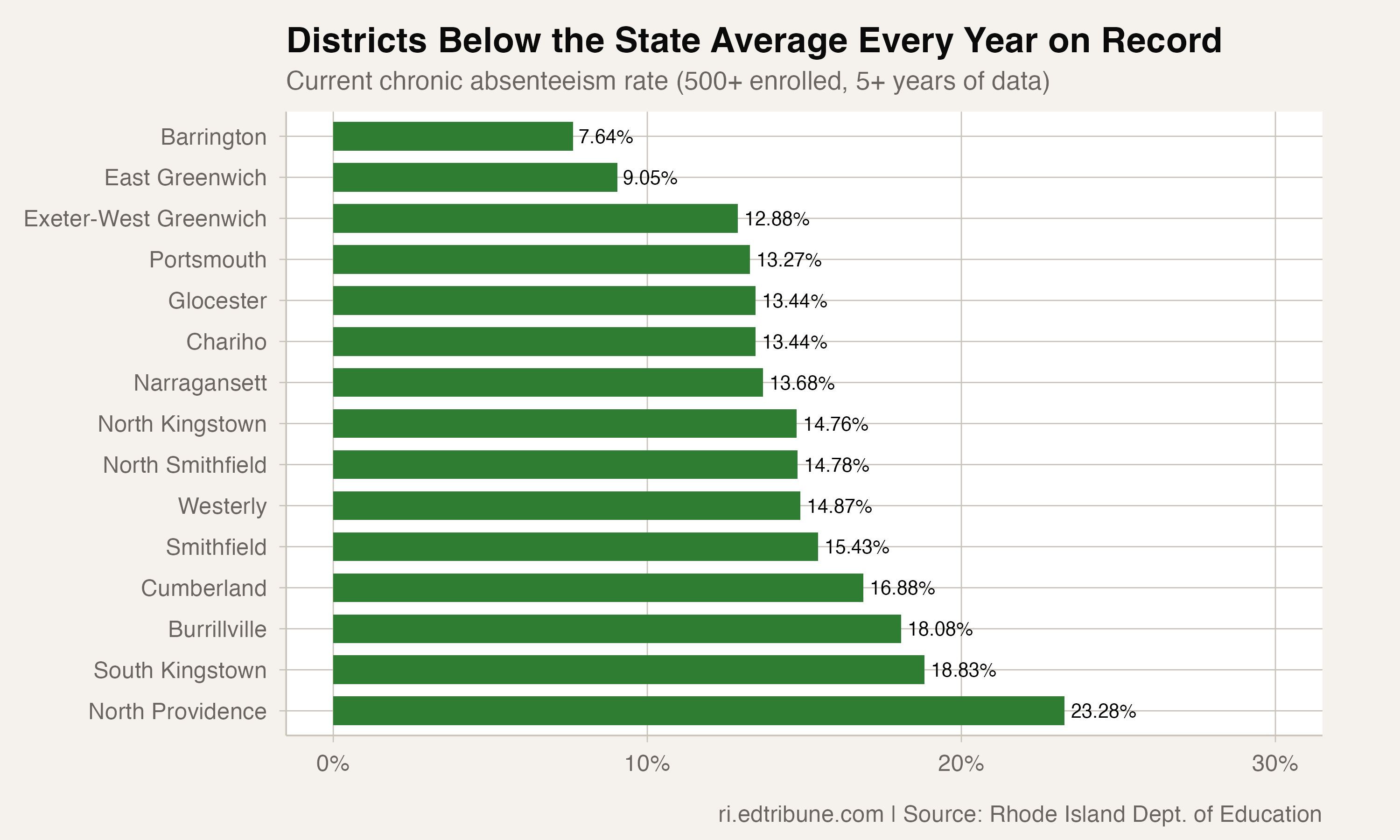
Barrington has maintained the lowest chronic absenteeism rate among large RI districts for 13 years, never exceeding 10% — even during the COVID peak.
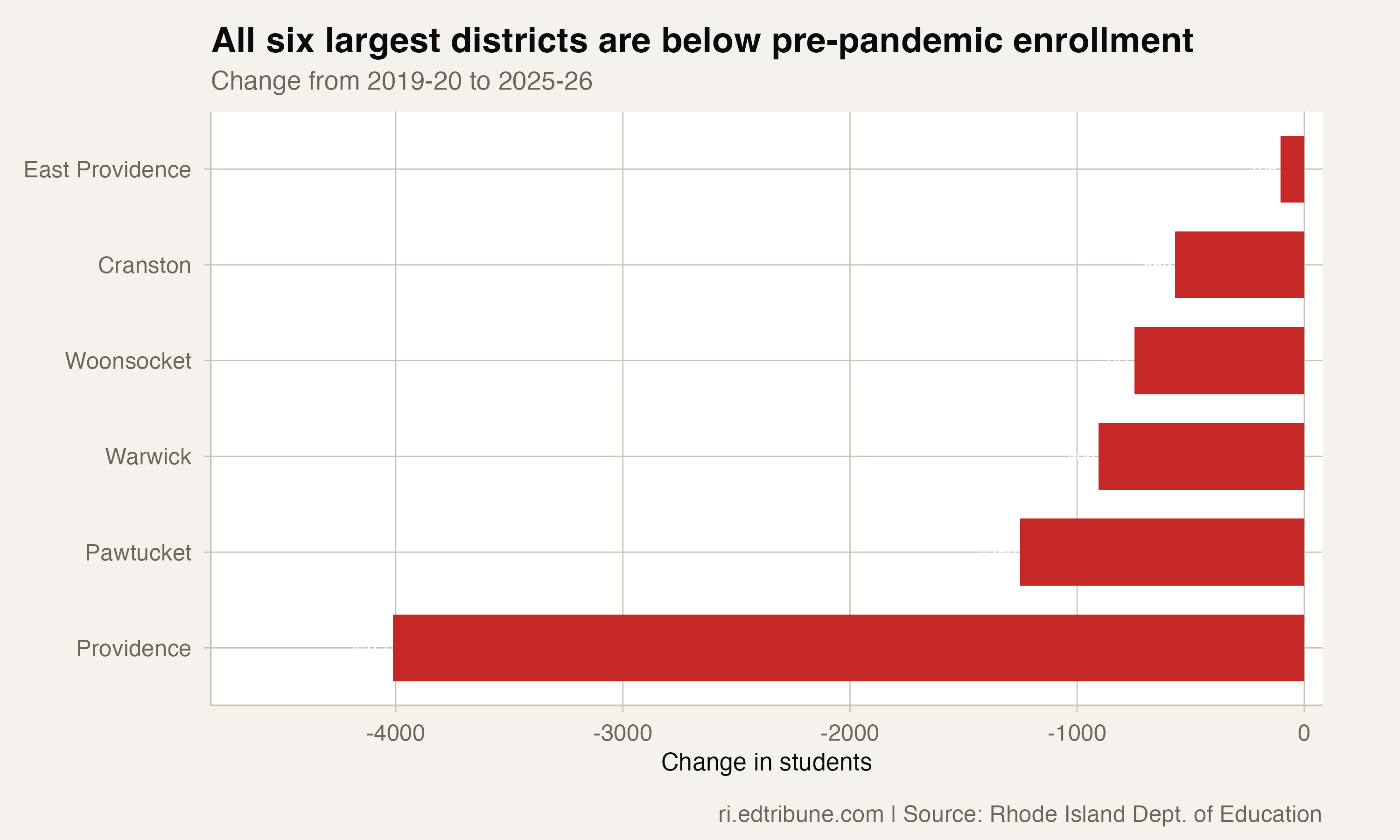
Providence, Cranston, Pawtucket, Warwick, Woonsocket, and East Providence all remain below pre-pandemic enrollment, a combined loss of 7,589 students.
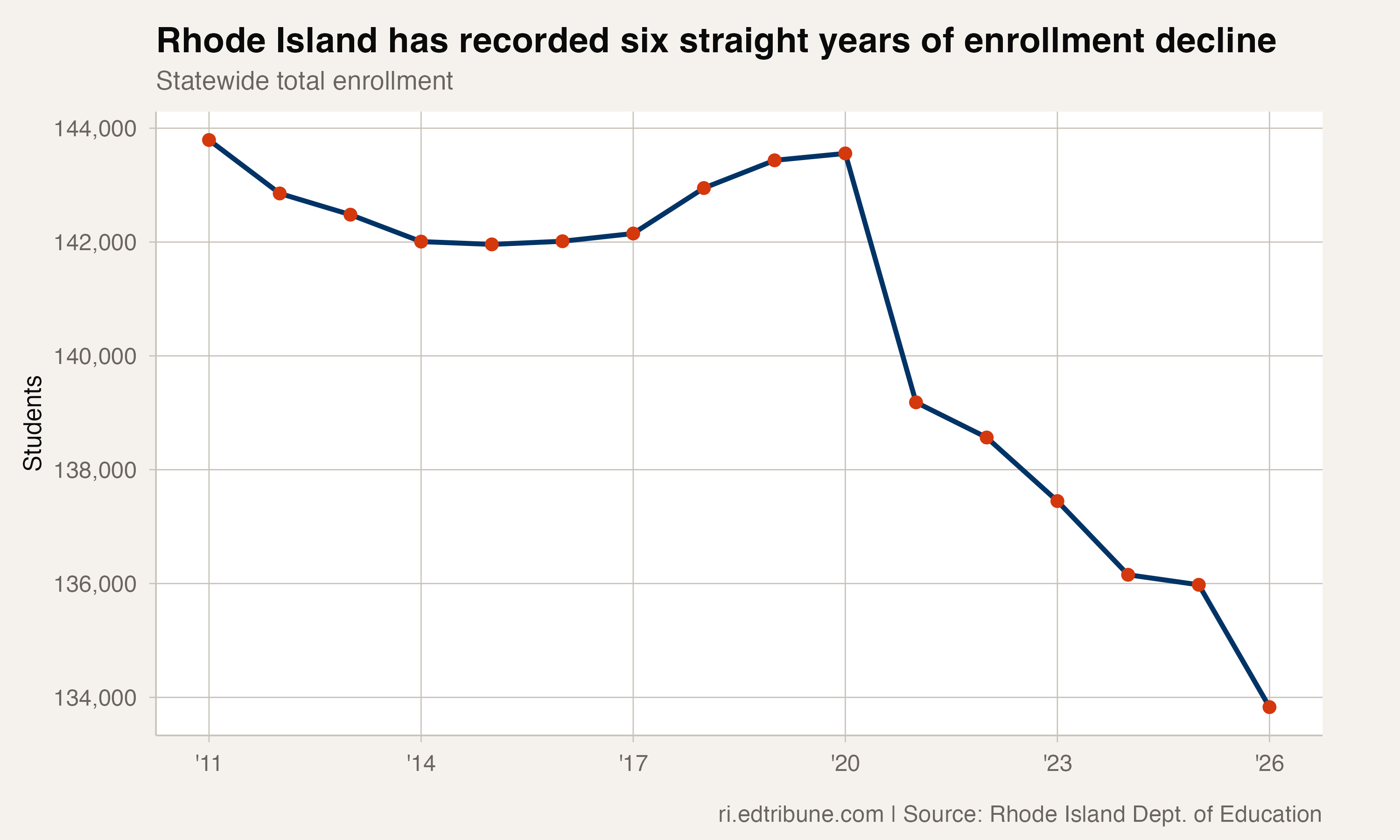
RI public schools have lost students every year since 2019-20. The six-year streak erased 9,728 students and shows no sign of ending.
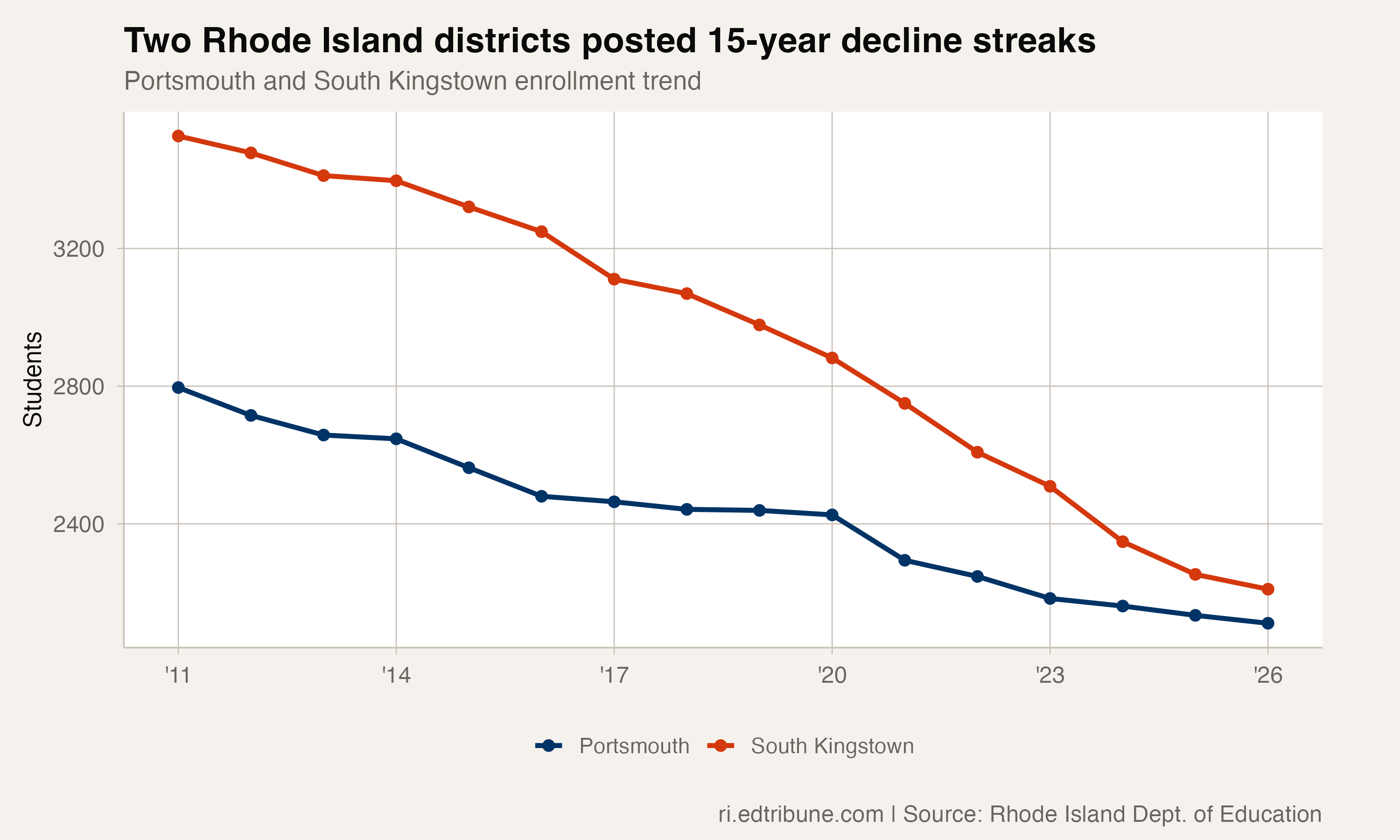
Portsmouth and South Kingstown each posted 15 consecutive years of enrollment decline, losing a combined 2,002 students since 2010-11.
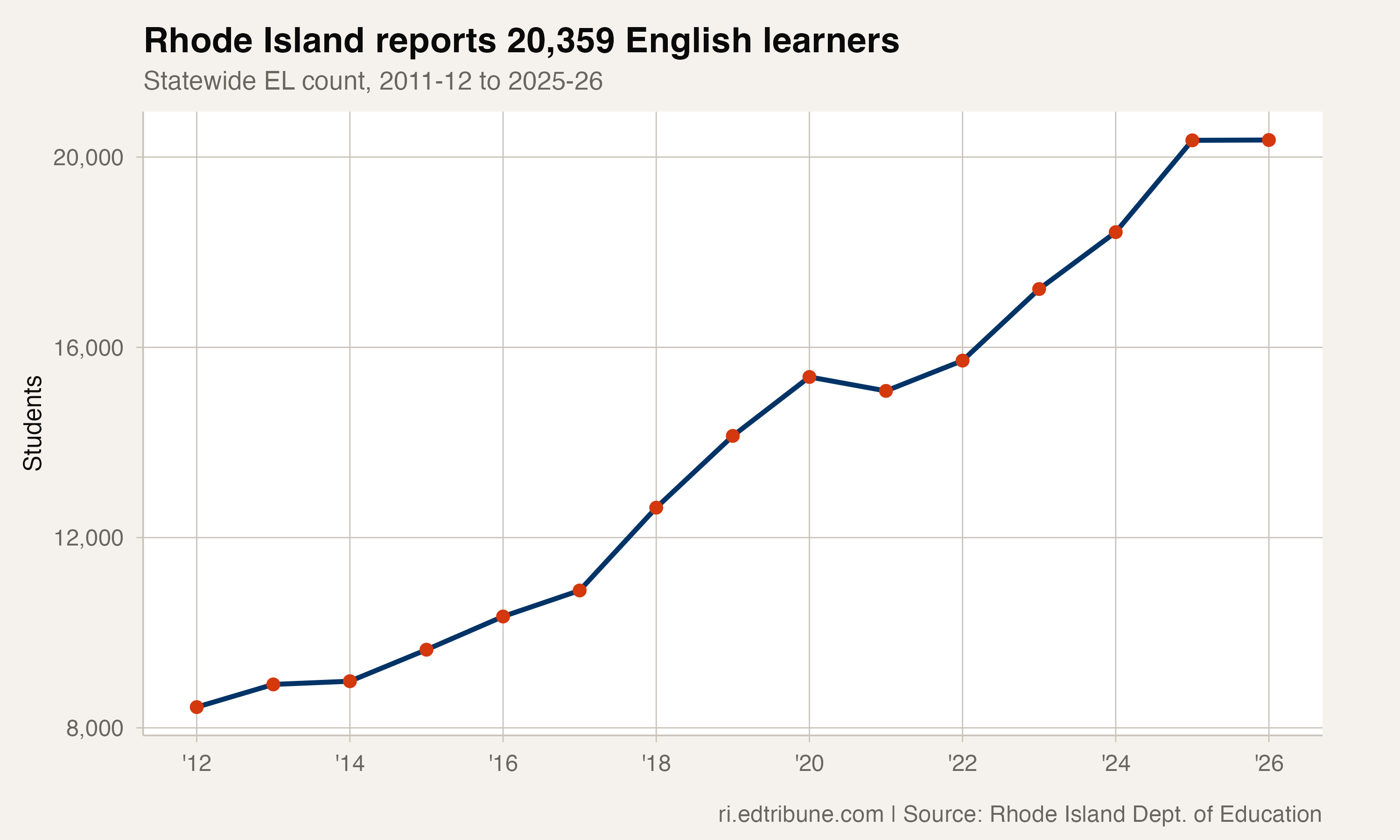
English learners now make up 15.2% of Rhode Island enrollment, up from 5.9% in 2011-12, even as growth nearly stopped in 2025-26.
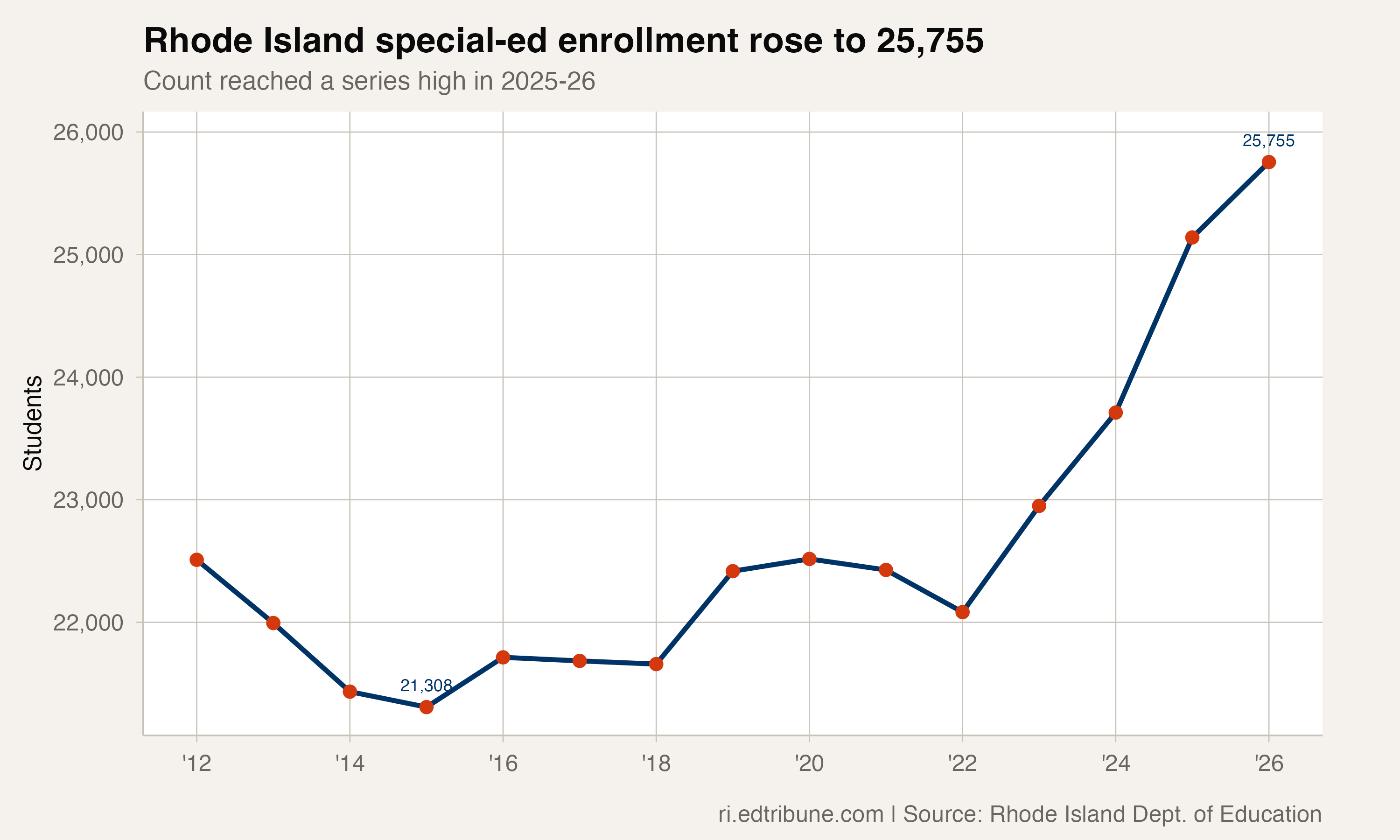
Rhode Island's special-education share hit 19.2% in 2025-26, nearing one in five students, as the state added 3,328 students to the rolls since 2020-21.
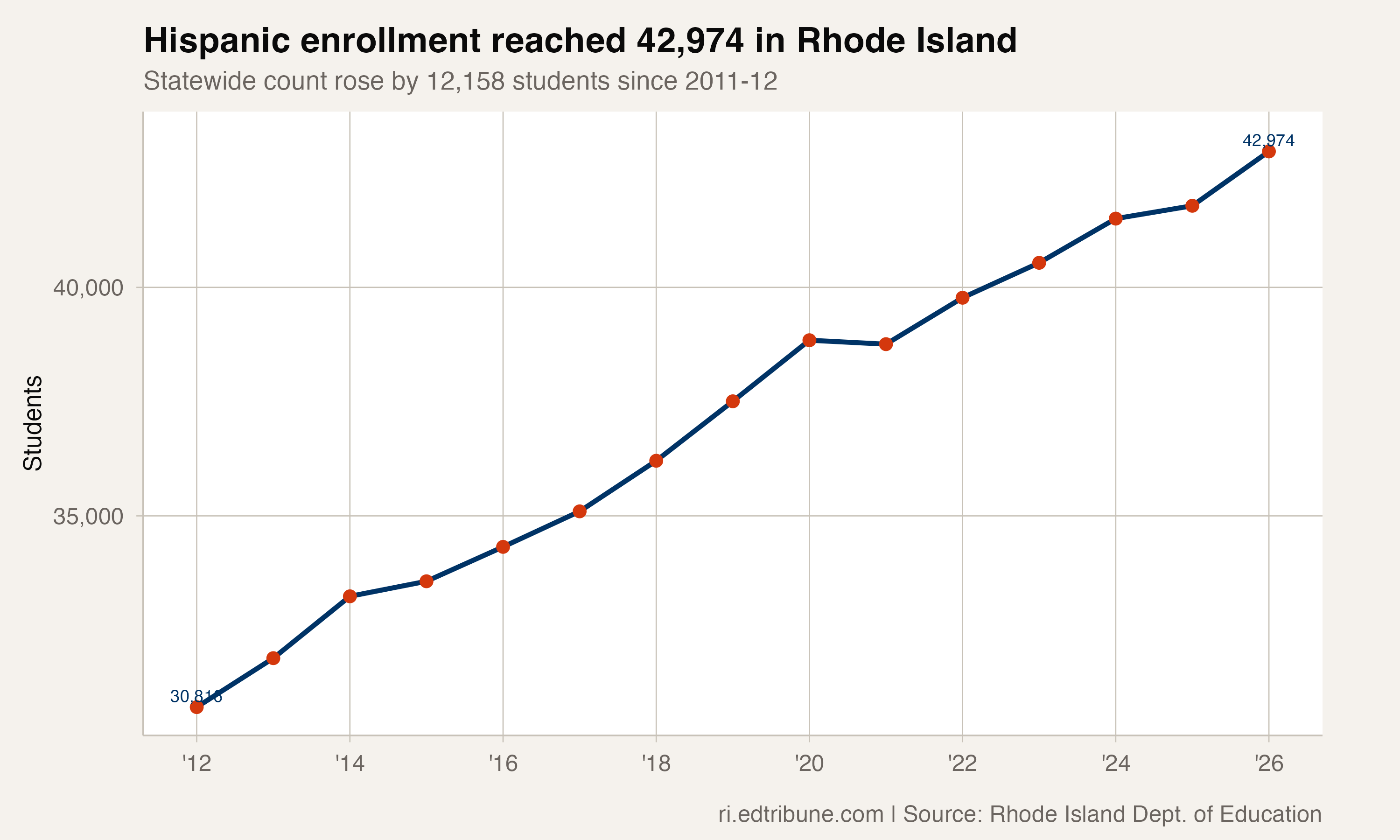
Hispanic enrollment in Rhode Island climbed to 42,974 students in 2025-26, reaching 32.1% of the student body after 14 years of nearly unbroken growth.